The biggest step in school
Most students and parents expect Class 12 to be hard. Fewer expect how hard Class 11 can be. In the science stream especially, the gap between Class 10 and Class 11 is larger than any jump before it. Physics becomes mathematical, chemistry adds physical and organic chemistry in real depth, and maths brings limits, calculus and vectors. Many students who did well in Class 10 have a difficult first term.
Class 11 also matters more than it seems. A large part of the Class 12 syllabus, and of most entrance exams, builds on Class 11 topics. A student who falls behind in Class 11 spends Class 12 trying to catch up and prepare for the boards at the same time.
Choosing a stream
For CBSE and most Indian state boards, Class 11 is when students choose a stream:
- Science, with physics and chemistry plus maths (often called PCM), biology (PCB), or both.
- Commerce, with accountancy, business studies and economics, often with maths.
- Humanities, with subjects such as history, political science, geography, economics and psychology.
The choice is best made on what your child enjoys and does well at, not only on what friends are choosing. If you are unsure, the free assessment in maths and science can show whether the foundations for a science stream are secure. Students in A-Level and IB Diploma programmes make a similar choice when they pick their subjects and levels.
What students learn in Grades 11 and 12
- Physics. Mechanics, thermodynamics, waves, electrostatics, current electricity, magnetism, optics and modern physics, with numericals throughout.
- Chemistry. Physical, organic and inorganic chemistry, including reaction mechanisms, equilibrium and electrochemistry.
- Maths. Sets and functions, trigonometry, calculus, vectors, three-dimensional geometry, matrices, probability and statistics.
- Biology. Cell biology, plant and human physiology, genetics, evolution, biotechnology and ecology.
- Commerce. Accountancy from journal entries to financial statements, business studies, and micro and macroeconomics.
Where students usually struggle
- The maths inside physics and chemistry, especially for students whose algebra was never fully secure.
- Calculus, which is new in idea, not just in difficulty.
- Organic chemistry, where memorising reactions without understanding mechanisms stops working.
- Volume. Long syllabi, school tests, practicals and sometimes entrance exam preparation, all at once.
What one-to-one looks like in the senior years
Classes are usually 60 minutes, live on Google Meet, with the learning in Qlive Space, Qlive’s AI-powered, activity-based learning platform. The teacher follows your child’s board and school order where possible. Early in the year, most time goes on understanding new ideas properly; closer to the boards, more time goes on past papers, sample papers and timed practice, with the teacher showing where marks are lost.
Worksheets and checkpoints every two to three weeks come through Qlive Pulse. Written answers are photographed and marked by the teacher or our academic team with comments, and you get a notice in the Qlive Learn app when work is assigned and when it is marked.
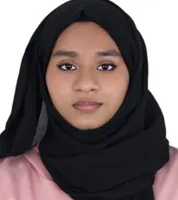
“I really enjoyed my chemistry classes at Qlive. The teacher helped me score excellent marks in my CBSE Plus Two board exams. Now, my brother and little sister are also studying at Qlive.”
Afrina Sakir Rahat, student, Grade 12, Sharjah Indian School (CBSE)
The parent’s role
At this age the student leads, and the best support is often practical: a quiet place for class, a steady weekly routine, and attention to the progress messages. Your Student Success Partner checks in through the Qlive Learn app and is the person to tell if your child wants a change of focus, extra classes before exams, or a different time. The app shows every class in your own timezone and has a chat for each class with the teacher and the Qlive team.
Start with a free assessment
Whether your child is about to start Class 11 or is already feeling the pressure of Class 12, the free assessment shows which topics are secure and where the gaps are. It is free, and there is no obligation to book classes.